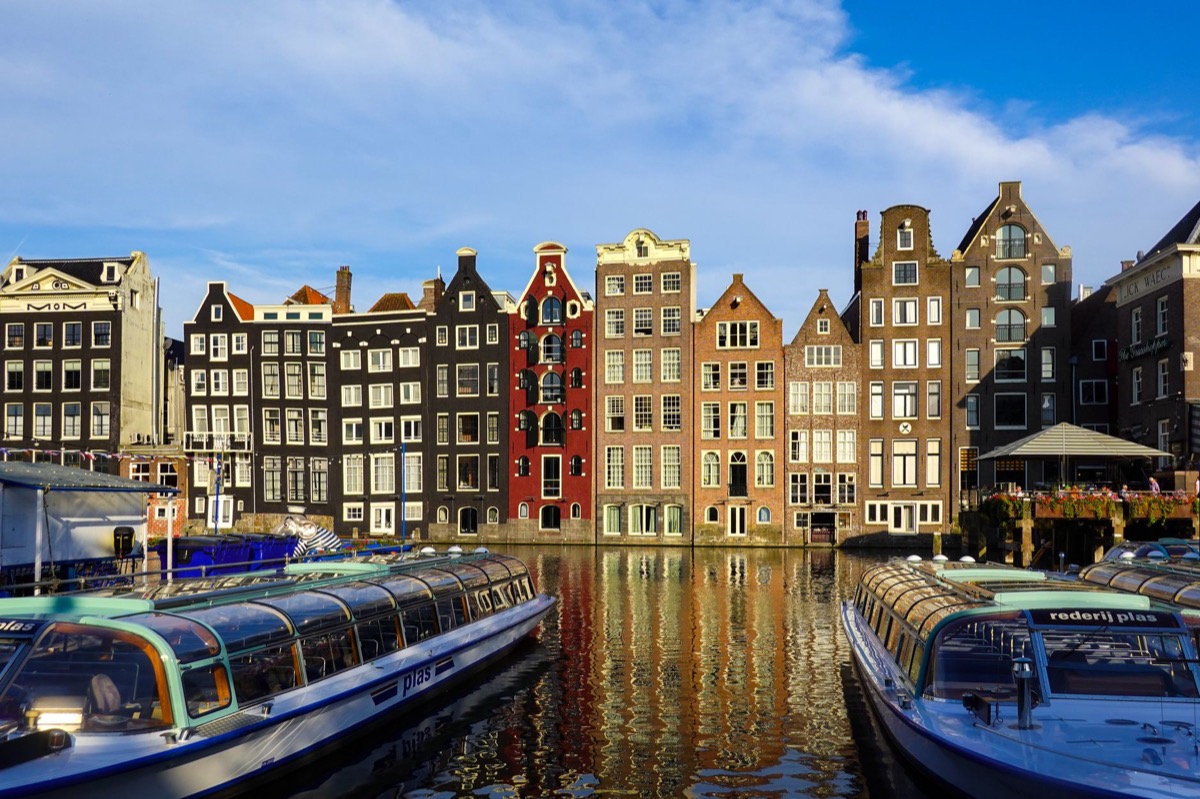
- Rotterdam is the largest sea port in Europe and the EU's main entry point for Asian-origin electronics.
- Schiphol Airport (Amsterdam) is one of Europe's top three cargo hubs; major distributor warehouses cluster around it.
- Poland (Warsaw, Wroclaw) is a labour-arbitrage manufacturing centre and a refurbisher hub serving Eastern and Central Europe.
- EU spec is the dominant variant, physical SIM tray on iPhone, EU cellular bands, CE certification.
- EORI registration is mandatory for any company importing or exporting in the EU.
How does EU wholesale electronics actually flow?
The conventional view is that Germany dominates European B2B electronics. The trade reality is different. Most Asian-origin electronics enter the EU through Rotterdam (sea) and Amsterdam Schiphol (air), are warehoused and partially repackaged in the Netherlands, and then move to Poland for refurbishment, B2B distribution and onward export to Eastern Europe and CIS.
Germany has large domestic distribution but is a weaker hub for Asian-origin re-export. The UK is structurally separated post-Brexit. France, Italy and Spain are net consumers, not hubs.
Why is the Netherlands the EU gateway for wholesale electronics?
Rotterdam port
Rotterdam handles the highest container volume in Europe. For wholesale electronics, the relevant flows are:
- Container imports from Shenzhen / Yantian / Singapore / Hong Kong arriving daily.
- Bonded warehouse capacity at Maasvlakte for goods awaiting customs clearance or onward EU distribution.
- Truck and rail connections to all major EU markets within 24-72 hours.
Schiphol cargo
Amsterdam Schiphol is one of Europe's top three cargo airports. Apple, Samsung and other major OEMs use Schiphol as a primary EU distribution point. Surrounding industrial parks (Schiphol-Rijk, Hoofddorp) host the major distributor warehouses.
Dutch trader profile
The Dutch wholesale electronics community is institutional and English-fluent. Most operations are formal LLCs (BV, NV) with public Chamber of Commerce (KvK) records. Trade-finance infrastructure through Dutch banks is strong.
Trading this stock yourself? Aikon is a live floor for wholesale electronics: registered companies post buy and sell offers and deal with each other directly. Join free.
What is Poland's role as the labour and refurbisher layer?
Poland's position is different. Polish wages are roughly 30 to 40 percent of German equivalents but EU-resident, EU-customs-included, and CE-certified. This makes Poland the preferred EU location for:
- Phone refurbishment. Major refurbishers serving European retail and corporate channels operate from Warsaw, Wroclaw and Kraków.
- Repackaging and quality inspection. Stock arriving from Asia is often QC'd in Poland before being released to other EU buyers.
- B2B distribution to Eastern EU. Polish distributors serve Romania, Bulgaria, Hungary, Czechia, Slovakia and the Baltics with regional fluency.
- CIS-direction exports. Goods moving to Ukraine, Belarus (where permitted), Moldova and onward.
Warsaw and Wroclaw host the largest wholesale clusters. The Komorniki / Poznań area is heavy on logistics. Pricing on EU-spec stock from Poland is often 2-5 percent below Dutch and German equivalents purely on labour cost.
What does EU spec mean as a regional variant?
EU-spec phones are the dominant variant traded through Poland and the Netherlands:
- Physical SIM tray on iPhone (vs eSIM-only US-spec).
- European cellular bands fully supported.
- CE certification.
- European warranty path.
- Multi-language OS support including Polish, German, Dutch, etc.
EU-spec is the preferred variant for resale into the entire European market plus much of Africa (where the legacy of European telecom standards drives demand). Cross-region buyers from Africa frequently source EU-spec stock from Polish and Dutch wholesalers.
What is EORI and why is it the basic EU compliance requirement?
EORI (Economic Operators Registration and Identification) is the EU-wide ID number required to import or export commercial goods. Any trader operating in the EU must have an EORI number issued by their member state of establishment. EORI is free, takes 1-2 weeks to obtain, and is mandatory.
For non-EU companies wanting to import into the EU, they must either:
- Register for EORI in their target member state (typically Netherlands or Ireland for Asian-origin goods).
- Use an EU-resident customs agent who has an EORI.
What are the onward markets from Poland and the Netherlands?
| Destination | Primary route | Categories |
|---|---|---|
| Germany | NL/PL truck | All categories, biggest EU consumer market |
| France, Italy, Spain | NL/PL truck | Mid-tier and used phones, accessories |
| Romania, Bulgaria, Czechia | PL truck | Mid-tier phones, refurbished iPhones |
| Baltics | PL truck | All categories |
| Africa (re-export) | NL → Lagos / Casablanca sea | EU-spec used phones, accessories |
| Ukraine, Moldova | PL truck | Mid-tier and used phones |
What are the VAT considerations for EU wholesale traders?
EU VAT on phones is 19-25 percent depending on member state. For B2B intra-EU transactions, reverse-charge VAT applies, the buyer accounts for VAT in their own jurisdiction. For imports from non-EU, VAT is paid at the border (or deferred via warehousing arrangements). For exports from EU, VAT is zero-rated.
The implication: VAT itself is rarely a cost for compliant B2B traders, but VAT compliance overhead is meaningful. Working with EORI-registered, VAT-compliant counterparties is essential.
How do you verify counterparty trust in PL and NL?
Both jurisdictions have searchable public company registries:
- Netherlands: KvK (Chamber of Commerce), fully searchable, paid extracts available.
- Poland: KRS (National Court Register), public, free for basic data.
Standard trust practice for first-time deals: company extract, EORI confirmation, VAT number verification through VIES (the EU's VAT validation system), bank reference for larger trades.
What trader profile wins in PL/NL?
- EU-resident operations with EORI, VAT compliance and bonded warehouse access.
- Multi-corridor traders serving German, French and Eastern European downstream markets.
- Refurbishment-integrated operators with QC capacity in Poland.
- Logistics-integrated with own forwarding and customs agents.
How do PL and NL traders use Aikon?
Polish and Dutch traders on Aikon are concentrated in EU-spec wholesale and refurbishment. The platform sees use for:
- Sellers offering EU-spec stock to African buyers.
- Polish refurbishers listing graded lots to other EU and non-EU buyers.
- Cross-Europe sourcing where buyers want stock from a Dutch bonded warehouse without travelling.