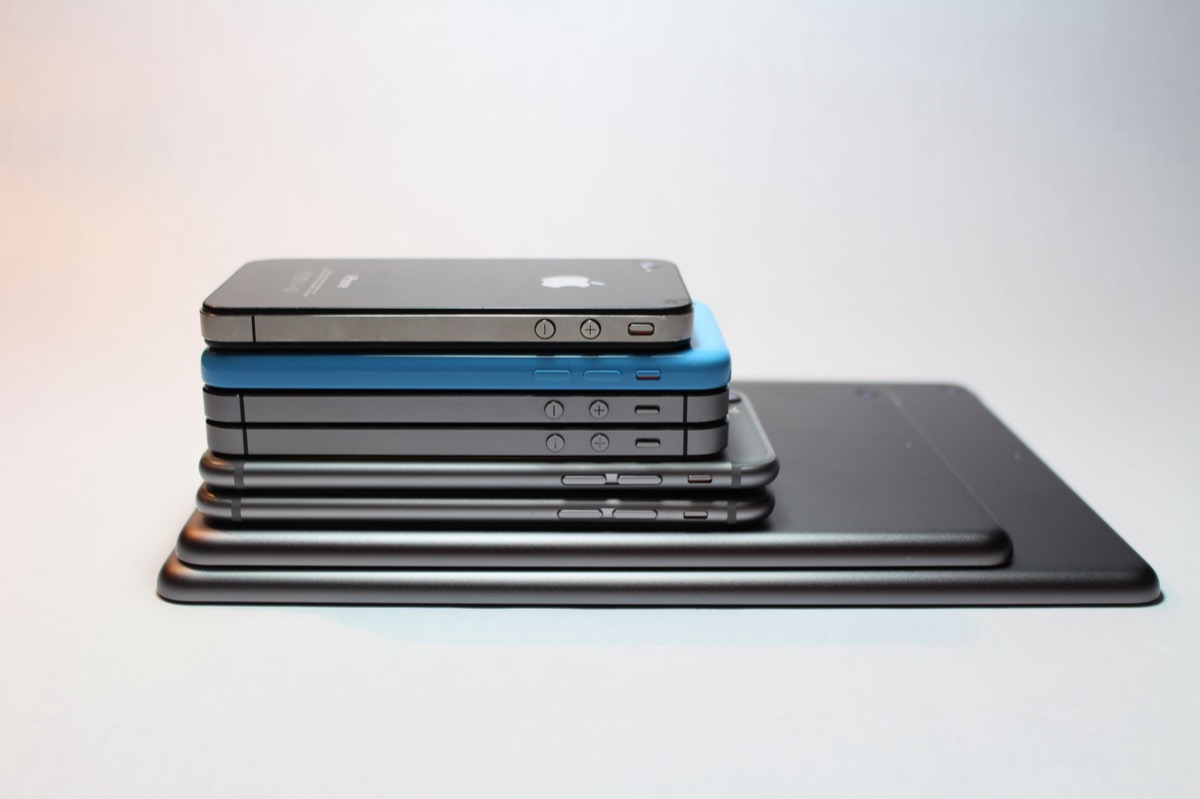
- iPhone is roughly 35-45 percent of wholesale electronics dollar value globally.
- Apple uses tight authorised-distributor allocation; most independent wholesale trade is grey-market or post-warranty.
- Regional spec matters more for iPhone than for Android: US-spec is now eSIM-only on recent models; EU and Asia spec retain physical SIM.
- iPhone 16 series is the dominant secondary-market category in 2026; iPhone 15 transitioning into mid-tier; iPhone 17 commanding new-launch pricing.
- Grade A used iPhone 14 EU-spec wholesale prices in May 2026 cluster around USD 340-380 depending on storage and battery health.
Why is iPhone structurally different from other wholesale phone categories?
Apple controls iPhone supply more tightly than any other smartphone manufacturer. Authorised distribution is allocated through a small number of approved channel partners (in 2026, roughly 200 globally). Pricing is contractually fixed at the authorised level. Cross-region sales by authorised distributors are restricted.
The result: most independent wholesale iPhone trade is in three layers:
- Authorised distributor surplus. Stock that authorised channels divert to wholesale because of allocation/demand mismatch.
- Carrier and retail returns. 14-day phones, insurance returns, refurbisher inputs.
- Cross-region grey market. US-spec phones bought in the US and re-sold in Latin America or the Middle East.
What does the 2026 iPhone product matrix look like for wholesale traders?
| Model | Wholesale tier | Pricing trend (May 2026) | Volume |
|---|---|---|---|
| iPhone 17 / 17 Air / 17 Pro / 17 Pro Max | New / current | Stable, premium | Constrained allocation |
| iPhone 16 / 16 Plus / 16 Pro / 16 Pro Max | Mid-cycle (now -8 months from launch) | Declining 1.5-2 percent monthly | Highest secondary volume |
| iPhone 15 series | Mid-tier secondary | Stable, gradual decline | Very high used volume |
| iPhone 14 / 13 / SE | Lower-tier secondary | Stable | High in emerging markets |
| iPhone 12 / 11 / older | Budget tier | Slowly declining | Volume in Africa, South Asia |
Trading this stock yourself? Aikon is a live floor for wholesale electronics: registered companies post buy and sell offers and deal with each other directly. Join free.
Why is regional spec such an iPhone-specific issue?
Apple manufactures iPhones in distinct regional variants with different model numbers. The variants differ in:
- SIM configuration. US-spec recent iPhones (since iPhone 14) are eSIM-only. EU, Asia, ME and BR spec retain physical SIM.
- Cellular bands. Region-specific.
- Camera shutter sound. JP-spec phones have non-disable shutter sound.
- Warranty path. Apple warranty is regional in practice; cross-region warranty service is variable.
- FaceTime audio. KSA-spec phones do not support FaceTime audio (regulatory).
For a wholesale buyer, this means: "iPhone 15 Pro 256GB" without spec is not a complete SKU. The model number (A2848 vs A3104 vs A3102) determines which downstream market it can be sold into.
What makes used iPhone wholesale such a large category?
Used iPhones are the highest-volume single secondary-market category in wholesale electronics. Sources:
- US carrier trade-in promotions. The largest single source. Carriers offer aggressive trade-in credits to drive new-handset sales; the trade-ins flow to wholesale.
- UK 14-day returns. EU-spec, near-new condition, exported globally.
- Insurance write-offs. Phones replaced under insurance, often near-new, sold to refurbishers.
- Corporate refresh cycles. Enterprise devices coming off 24 to 36-month leases.
- Direct consumer trade-ins. Apple's own trade-in programme, plus third-party consumer trade-in services.
What are the 2026 iPhone wholesale pricing snapshots (May 2026)?
Indicative wholesale prices for high-volume SKUs in May 2026 (USD, FOB origin, large-volume buyer):
| SKU | Spec | New (NIB) | Grade A used | Grade B used |
|---|---|---|---|---|
| iPhone 17 Pro 256GB | EU/Asia | USD 1,110-1,160 | n/a (too new) | n/a |
| iPhone 16 Pro 256GB | EU/Asia | USD 910-950 | USD 760-810 | USD 680-740 |
| iPhone 15 Pro 256GB | EU/Asia | USD 800-840 | USD 640-690 | USD 570-620 |
| iPhone 15 128GB | EU/Asia | USD 640-680 | USD 490-530 | USD 430-470 |
| iPhone 14 Pro 256GB | US | n/a (EOL) | USD 530-570 | USD 470-510 |
| iPhone 14 128GB | EU/Asia | n/a (EOL) | USD 340-380 | USD 300-330 |
| iPhone 13 128GB | EU/Asia | n/a | USD 260-290 | USD 215-245 |
These are indicative ranges only. Actual prices vary by quantity, payment terms, location, lock status, and counterparty relationship. Use them as a starting point for verification, not as a settled rate sheet.
What does the 2026 iPhone trading cycle look like?
iPhone wholesale follows an annual cycle pegged to Apple's September launch:
- August-September: Last-generation pricing compresses 10-15 percent in the run-up to new launch.
- September-November: New launch, flagship pricing premium, allocation tightness.
- November-January: Holiday demand drives volume; used inventory builds from carrier trade-ins.
- January-April: Used market peaks; trade-in promotions in Q1 flood Grade A/B 2-year-old stock.
- May-August: Stable pricing; channel preparing for next cycle.
Where does iPhone wholesale actually happen?
- Authorised distributors, the formal channel. Tight allocation, fixed pricing.
- Hong Kong, Asia-spec hub, particularly for re-export to LatAm and Africa.
- Dubai, Re-export to Africa, ME, South Asia.
- Miami, US-spec to Latin America.
- UK, 14-day stock to global onward markets.
- Poland/Netherlands, EU-spec for European retail and African re-export.
- India, increasingly, India-manufactured iPhones for Middle East and Africa export.
What are the iPhone-specific risks in wholesale?
- iCloud lock. Covered in dedicated guides; the largest category-specific risk.
- MDM enrollment. Ex-corporate stock can be MDM-locked.
- Aftermarket parts. iOS now flags non-genuine displays, batteries and cameras.
- Regional spec mismatch. Selling US-spec into a market that demands physical SIM.
- Apple anti-grey-market enforcement. Apple actively monitors and acts against unauthorised channels in some markets.
How does iPhone trading work on Aikon?
iPhone is the single largest-volume category on the Aikon platform. Common offer patterns:
- UK aggregators listing 14-day phones for African and Middle Eastern buyers.
- HK and Dubai sellers offering Asia-spec stock to global buyers.
- Miami sellers offering US-spec to Latin American buyers.
- Refurbisher lots (Grade A/B/C) listed with structured grade and battery health fields.
- Private offer posting is heavily used by sellers protecting pricing structure from competitor visibility.