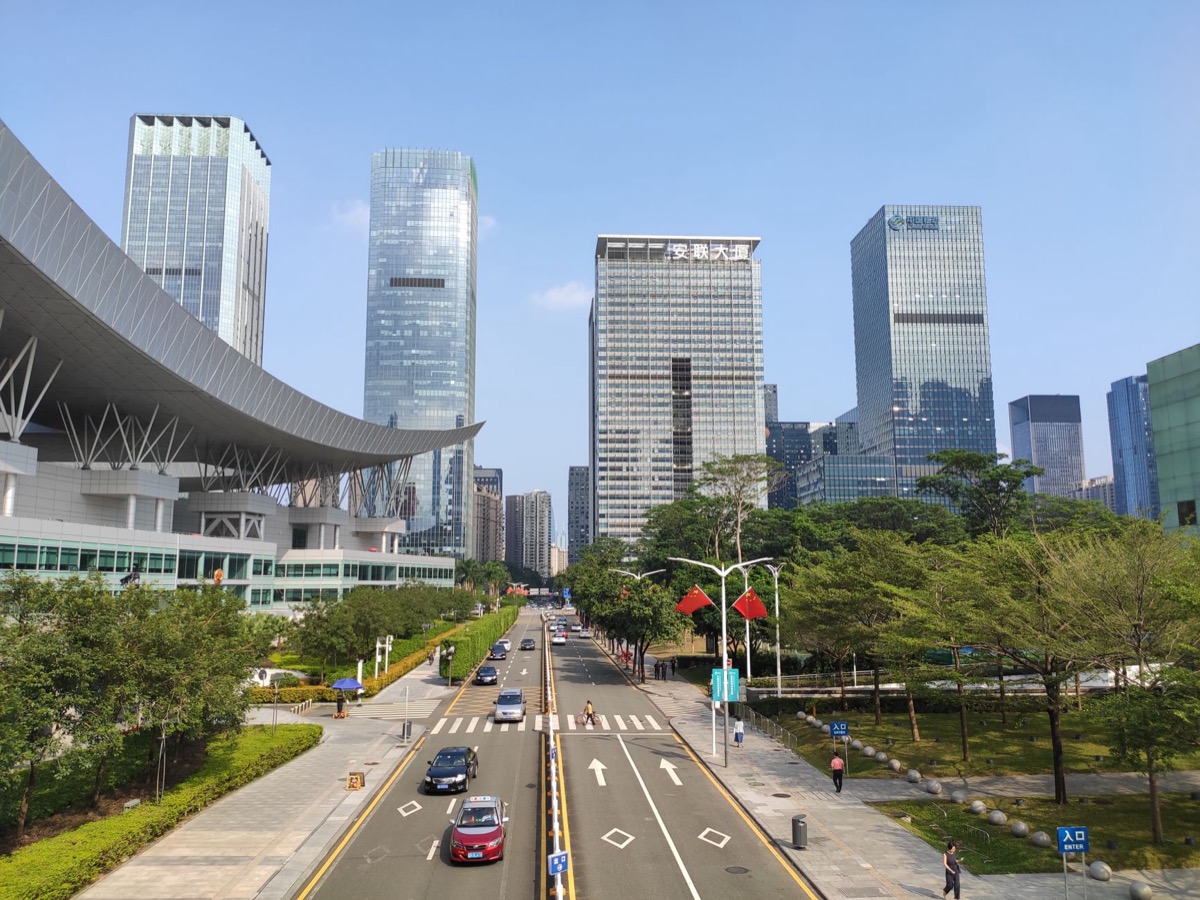
- Shenzhen is the densest phone manufacturing and trading cluster inside China, home to Huaqiangbei, the largest electronics market in the world. It is a major share of Chinese output, not all of it, and China itself is not the whole world market.
- Huaqiangbei is the largest electronics market in the world; a 1-square-kilometre district with thousands of wholesale storefronts.
- Factory-direct sourcing requires higher MOQs (typically 1,000+ units for finished phones, 5,000+ for accessories) but yields the best pricing.
- Alibaba and Made-in-China are starting points, not endpoints. Real B2B deals close after factory visits and trial orders.
- Quality control is non-negotiable: pre-shipment inspection at the factory is standard practice for any meaningful order.
Why does China dominate wholesale electronics manufacturing?
China's position is the result of three decades of compounding advantage. The Pearl River Delta (Shenzhen, Dongguan, Guangzhou) hosts the world's densest concentration of electronics component manufacturing, contract assembly, and supporting industrial infrastructure. The result: anything from a USB cable to a flagship smartphone can be produced from raw component to finished good within a 50-kilometre radius of central Shenzhen.
For international wholesale buyers, this matters because it means:
- The lowest unit cost on most electronics categories is in Shenzhen.
- Time from concept to first prototype is faster in Shenzhen than anywhere else.
- Customisation (rebranding, packaging, regional certification) is built into the manufacturing infrastructure.
What is the Huaqiangbei wholesale ecosystem?
Huaqiangbei (literally "China Strong North") is the largest electronics market in the world. The district covers roughly one square kilometre in central Shenzhen and houses thousands of wholesale storefronts across multi-floor buildings: SEG Plaza, Huaqiang Electronics World, Yuanwang Digital City, and dozens more.
What you can source from Huaqiangbei:
- Phone accessories at every price point and quality tier.
- Components: chips, displays, batteries, cameras, housings.
- Refurbished phones (extensive market for used iPhones, Android handsets).
- White-label finished goods (off-brand smartphones, tablets, smartwatches).
- Prototype and small-batch custom electronics.
Huaqiangbei is the wholesale layer above factory-direct. Most stalls aggregate from multiple factories and sell at a slight markup over factory price, in exchange for lower MOQs (often as low as 50-100 units) and faster fulfilment.
Trading this stock yourself? Aikon is a live floor for wholesale electronics: registered companies post buy and sell offers and deal with each other directly. Join free.
How do factory-direct, Huaqiangbei, and Alibaba compare as sourcing channels?
| Channel | Typical MOQ | Pricing | Customisation | Best for |
|---|---|---|---|---|
| Factory-direct | 1,000-10,000+ units | Lowest | Full | Established programmes, OEM/ODM |
| Huaqiangbei | 50-1,000 units | Mid | Limited | Off-the-shelf accessories, samples, refurb |
| Alibaba / 1688 | varies, often 100+ | Mid-high | Limited | First-time buyers, broad search |
| Made-in-China | varies | Mid | Limited | Industrial / B2B-specific products |
| Trade shows (Canton Fair) | Negotiated | Mid | Negotiated | Building factory relationships |
What is the reality of sourcing through Alibaba?
Alibaba (the international .com platform) and 1688 (the China-domestic platform owned by Alibaba) are starting points for finding suppliers, not channels for closing serious B2B deals. Real wholesale deals typically follow this path:
- Alibaba search for suppliers matching the SKU.
- Initial inquiry, pricing, sample order (50-100 units, expensive on a per-unit basis but worth it).
- Sample QC at the buyer's end.
- Factory visit (mandatory for orders above ~$50K).
- Negotiation of MOQ, pricing, payment terms, lead time.
- First production order with pre-shipment inspection (PSI).
- Repeat orders with progressively better terms as relationship matures.
Buyers who skip the factory visit and PSI step are the buyers who end up with quality issues. This is the most consistent failure pattern in international wholesale sourcing from China.
Why is pre-shipment inspection (PSI) essential when sourcing from China?
PSI is third-party inspection of finished goods at the factory, before payment release. Standard providers: SGS, Bureau Veritas, Intertek, AsiaInspection (now QIMA), TÜV. Cost: typically $300-$500 per inspection day. Coverage: random sampling of the production lot, packaging check, function test, packaging integrity, label correctness.
For any wholesale order above ~$20K, PSI is standard practice. For orders under that, buyers either accept higher risk or rely on the factory's in-house QC supplemented by remote video inspection.
What are the standard payment terms and structures for China sourcing?
Standard China-export payment patterns:
- 30/70 T/T, 30 percent on PO, 70 percent against B/L copy or after PSI. Most common for established relationships.
- L/C at sight, Letter of credit, used for larger deals. Adds bank fees of typically 0.5-2 percent.
- Alibaba Trade Assurance, Built-in escrow for Alibaba transactions. Common for first-time buyers.
- 50/50 T/T, Buyer-favoured term sometimes negotiable for very large orders or repeat buyers.
- Net 30 / Net 60, Trade credit, typically only available to repeat buyers with established histories.
What are the logistics options for shipping electronics from China?
Shenzhen and the surrounding region have extensive air and sea freight options:
- Air freight via SZX, HKG, GZX, Fast (3-7 days to most global destinations) but expensive. Standard for high-value, time-sensitive lots.
- Sea freight via Yantian, Shekou, Hong Kong, Slower (20-45 days) but much cheaper per unit. Standard for accessories and bulk volumes.
- Rail freight to Europe, China-Europe rail (Yiwu / Chongqing → Duisburg / Madrid). 18-22 days, between air and sea on cost.
What are the compliance considerations for exporting electronics from China?
For finished phones being exported from China:
- 3C Certification (China Compulsory Certificate), Required for sale within China. Usually irrelevant for export but can affect customs declarations.
- Destination-market certification, FCC (US), CE (EU), BIS (India), ANATEL (Brazil), IFT (Mexico), etc. Factories handling export typically have these certifications for the SKUs they produce.
- VAT refund on export, Chinese exporters can claim VAT refund on exported goods. This is built into the factory's pricing.
What trader profile wins in China sourcing?
- Volume-committed buyers able to meet factory-direct MOQs and place repeat orders.
- QC-disciplined operations with PSI built into every order.
- Factory-relationship-integrated, multiple factory contacts in each category, with annual visits and shared roadmaps.
- Mandarin-capable desks or local agents, written English is universal among export factories, but spoken Mandarin closes deals faster.
How do China-based traders use Aikon?
Aikon's Chinese trader population is concentrated in finished-phone and accessory wholesale, with particular strength in HK-adjacent operations. Common use patterns:
- Chinese sellers offering Asia-spec phones to international buyers.
- Refurbisher lots aggregated from Huaqiangbei sellers, listed for export-side buyers.
- Buyers (international) using the platform to identify Chinese counterparties without travelling.