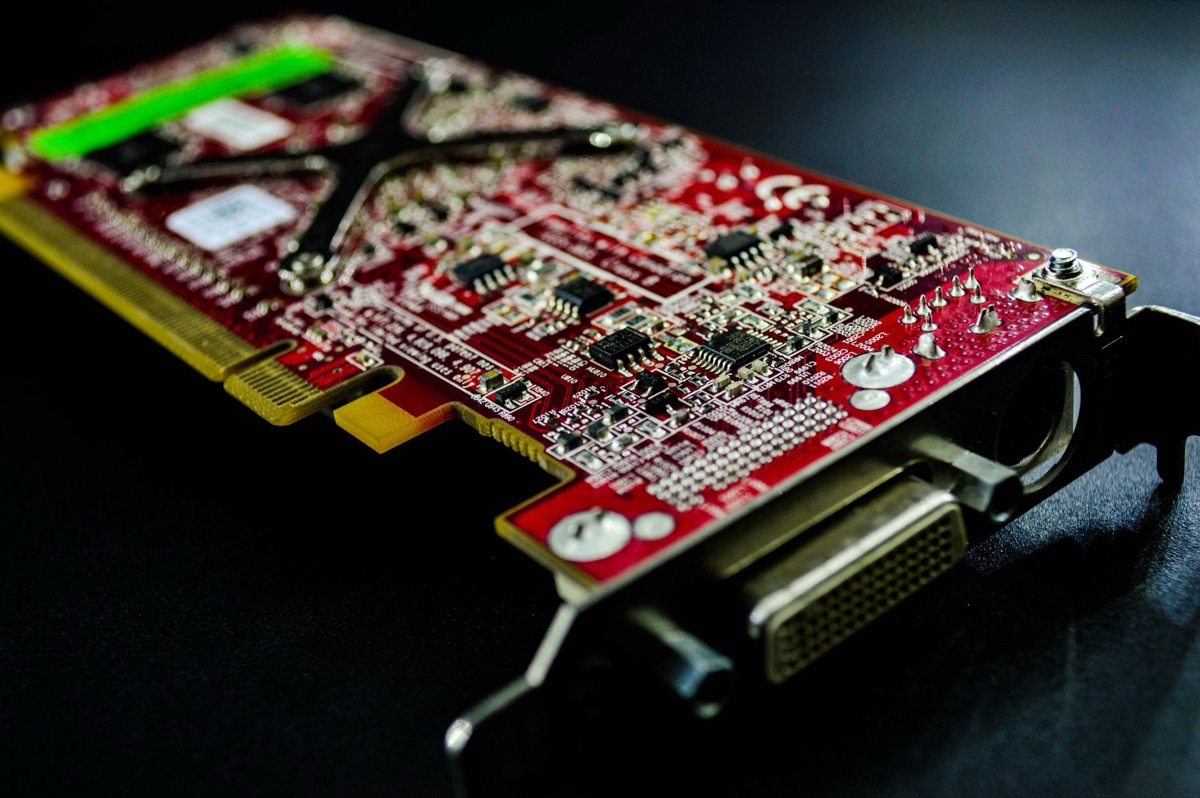
- Used GPU wholesale prices remain 35-55% below new MSRP for current-generation cards in good condition.
- Mining-history cards trade at 15-30% discount to gaming-history cards of the same model and grade.
- NVIDIA RTX 30 and 40 series dominate B2B volume; AMD Radeon RX 6000/7000 trade as a smaller secondary market.
- The biggest verification challenges are mining usage (often hidden), VRAM degradation, and counterfeit BIOS.
- Major sources include ex-mining farms, data centre AI repurposing, retail RMA aggregators, and warranty cycle returns.
Why used graphics cards became a serious B2B category?
Five years ago, used GPU wholesale was a marginal sub-category of broader PC component trading. Three structural shifts changed that. First, the 2021-2022 crypto mining boom flooded the secondary market with hundreds of thousands of mining-used cards when Ethereum's Merge (September 2022) ended GPU mining profitability. Second, the 2023-2024 AI training boom created a separate institutional buyer pool willing to pay premium prices for working GPUs. Third, retail GPU prices remained elevated through 2024-2026, sustaining wholesale demand for used alternatives.
The result is a fragmented but high-value market. Used RTX 3080s, 3090s, 4070s, and 4080s trade at meaningful volumes through B2B channels, with a long tail of older Pascal and Turing cards still moving for budget builds and HTPC use cases.
Where do wholesale-volume used GPUs come from?
Five primary supply channels feed B2B GPU wholesale:
- Ex-mining farms. Massive volumes liberated by the Ethereum Merge and successive Bitcoin halvings. Most have been trickled into the market since 2022 but pockets of bulk supply still emerge from farm closures and bankruptcy auctions.
- Data centre AI repurposing. As enterprises shift to dedicated AI accelerators (H100, MI300X), older consumer-tier GPUs used for inference workloads come out of service. Smaller volumes but very clean stock.
- Retail RMA aggregation. Returns from Amazon, Newegg, Best Buy, Currys flow through the same reverse-logistics pipeline as other electronics, ending up on B-Stock and similar liquidation platforms.
- Warranty cycle returns. Cards returned under manufacturer warranty (NVIDIA Founders Edition, EVGA, ASUS, MSI) that are repaired and resold as B-stock or refurbished.
- Consumer trade-in / resale. Aggregated by specialised buyers like Razer Pay-Per-Use programmes, NeweggHub, and regional refurb chains.
Trading this stock yourself? Aikon is a live floor for wholesale electronics: registered companies post buy and sell offers and deal with each other directly. Join free.
How do I grade used GPUs for wholesale?
GPU grading is more technical than phone grading because the failure modes are subtler. The standard wholesale checks cover four dimensions:
- Visual / cosmetic. Backplate scratches, fan blade damage, port condition, screw-tamper evidence (warranty seals broken indicate prior teardown). PCB inspection through fan vents reveals burnt components.
- Thermal performance. Stress test (FurMark, OCCT, 3DMark) for 30+ minutes monitoring core and memory temperatures. Cards that throttle below stock clocks under sustained load have thermal pad or paste issues.
- VRAM integrity. Run MATS or similar VRAM testing tool. Mining heavily stresses memory chips; degradation manifests as artifacts under load or outright crashes in memory-intensive workloads.
- BIOS verification. Check vendor BIOS via GPU-Z and verify against manufacturer's archive. Ex-mining cards often have flashed BIOS optimised for hashrate; some have malicious BIOS that misreport the card model.
| Model | Typical wholesale Grade B (gaming) | Mining-used discount |
|---|---|---|
| RTX 4090 | $1,250$1,420 | not applicable (post-mining era) |
| RTX 4080 | $680$820 | n/a |
| RTX 4070 Ti | $520$620 | n/a |
| RTX 4070 | $390$470 | n/a |
| RTX 3090 Ti | $580$720 | 15-25% |
| RTX 3090 | $480$620 | 20-30% |
| RTX 3080 (10GB) | $310$400 | 20-30% |
| RTX 3070 | $210$280 | 15-25% |
| AMD RX 7900 XTX | $580$720 | n/a |
| AMD RX 6800 XT | $280$360 | 20-30% |
Prices are indicative for cards with intact warranty seals, original cooler, no visible damage, and verified-clean stress test. Mining-history cards (where disclosed) trade at the discount shown.
How can I tell if a GPU was used for mining?
This is the most contentious topic in GPU wholesale. Sellers routinely deny mining history; buyers routinely assume mining history if the deal looks too good. The reliable signals:
- Lot context. Bulk identical cards from a single seller, especially if all the same memory size and similar serial-number ranges, almost always came from a mining operation.
- Power connector wear. Mining rigs run 24/7 for years. Power connectors show distinctive oxidation and polish from heat cycling.
- Backplate dust pattern. Mining setups have specific airflow patterns (open-air rigs); the resulting dust accumulation looks different from desktop case mounting.
- Custom BIOS. Mining cards typically have hashrate-optimised BIOS (lower core clock, higher memory clock). GPU-Z and TechPowerUp BIOS database can verify against stock.
- Thermal pad degradation. Continuous 24/7 operation degrades thermal pads faster than gaming use. Internal teardown reveals dried-out, hardened pads.
The honest mining-card tier
Some wholesale sellers explicitly label stock as “ex-mining, tested, full functional.” This is actually the safer purchase than identically-priced “gaming-only” lots that may be misrepresented. Buy from sellers who disclose, the disclosed-mining tier is a real, viable wholesale segment with predictable economics. Buyers in emerging markets and budget-build channels actively prefer it because of the price discount.
How do NVIDIA and AMD cards trade differently in B2B?
NVIDIA dominates wholesale GPU volume by a factor of 4-6x over AMD. This isn't a quality judgment, it reflects the supply pipeline. Mining was disproportionately NVIDIA-heavy due to CUDA support, retail share leans NVIDIA, and AI inference workloads almost exclusively run on NVIDIA. AMD cards trade in B2B but with a smaller buyer pool, longer time-to-sale, and slightly worse pricing relative to MSRP.
Within NVIDIA, RTX 30 and 40 series command the bulk of attention. RTX 20 series (Turing) trades meaningfully lower, these are increasingly export-market and budget-build inventory. GTX 16 series and older Pascal are at parts-tier pricing.
What are the major risks in GPU wholesale?
Three risks dominate:
- Hidden mining wear. A card that passes a 30-minute stress test may fail under sustained AI workload after 50 hours. The only mitigation is statistical sampling and trusted-supplier relationships.
- Counterfeit / repackaged cards. Lower-tier chips reflashed with higher-tier BIOS, or refurbished cards rebranded. Always verify with GPU-Z device ID against expected values.
- Warranty status fraud. Sellers claiming “under warranty” for cards that have invalidated their warranty through transfer, disassembly, or registration history. Verify directly with the manufacturer when warranty value is part of the deal.