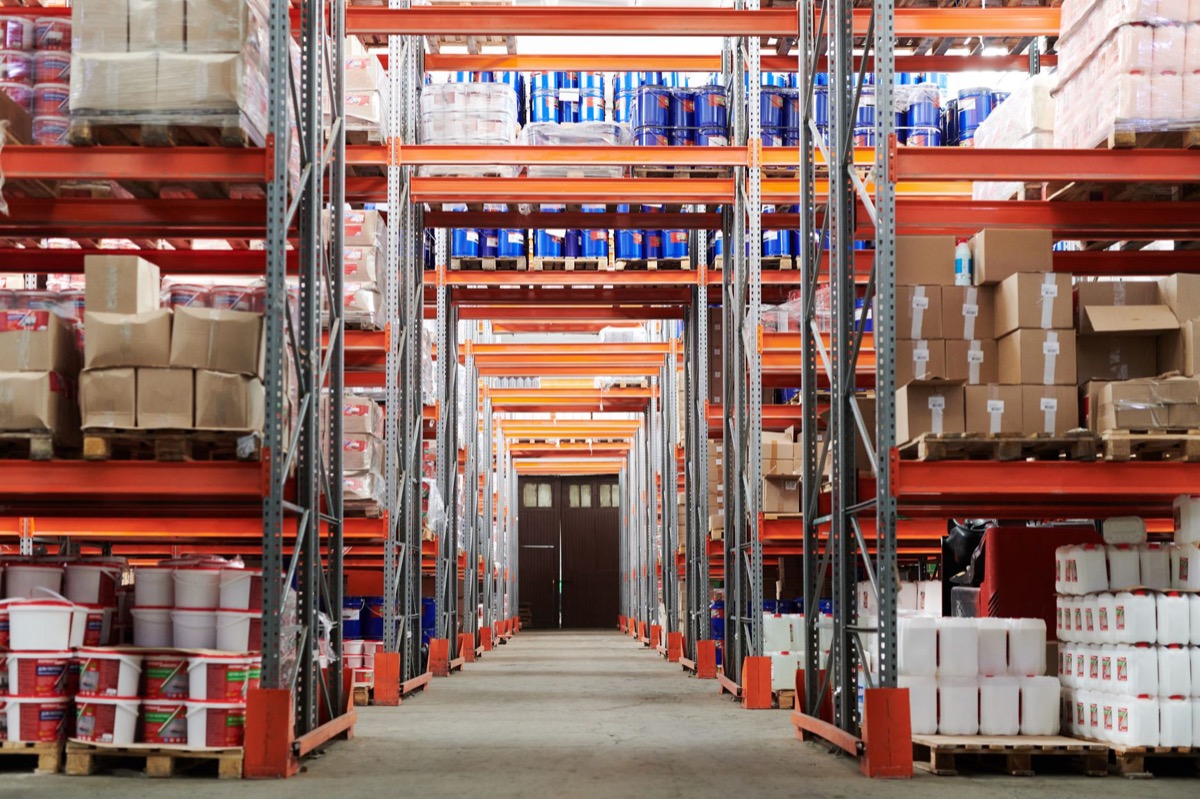
- Liquidation pallets are bulk lots of returned, overstock, or salvage merchandise from retailers and brands.
- Manifest pallets (with itemised contents) cost more but are the only viable purchase for institutional B2B traders.
- Blind pallets are gambling tools, not B2B inventory, the YouTube unboxing market drives their pricing irrationally.
- The three major sources are B-Stock, Via Trading, and Direct Liquidation, each with different category and quality profiles.
- Institutional buyers focus on category-specific pallets at scale, not mixed-category bargain pallets.
What exactly is a liquidation pallet?
A liquidation pallet is a bulk lot of merchandise sold by the original retailer or brand at a steep discount to clear inventory. Pallets come from several sources: customer returns (Amazon, Walmart, Target, Best Buy, Currys), retail overstock, end-of-life clearance, store-closure liquidation, and insurance write-offs. Volume ranges from a single physical pallet (around 50-200 units depending on category) to multi-pallet truckloads.
Liquidation has been around for decades but the modern pallet market exploded after Amazon and other major retailers built systematic reverse-logistics partnerships in the late 2010s. The rise of YouTube unboxing content created a parallel retail-flipper market that pulled pricing upward and introduced a lot of noise that B2B traders need to filter out.
Where do liquidation pallets come from?
Five primary sources feed the liquidation pallet market:
- Customer returns, the largest source. Returns from major retailers go into reverse-logistics centres run by FedEx Supply Chain, Genco, Ingram Micro Lifecycle, or the retailer's in-house operation. After triage (a portion gets refurb-graded for direct resale), the rest goes to pallet liquidation.
- Retail overstock, unsold seasonal inventory, discontinued models, packaging redesigns. This is the highest-quality pallet source because units are typically new and unused.
- End-of-life / EOL stock, products at the end of their commercial life, sold off in bulk to make way for new lines.
- Store-closure liquidation, when retailers close stores or go bankrupt, their inventory is sold by liquidators (Tiger Capital, Gordon Brothers, Hilco). Bed Bath & Beyond, Toys R Us, Circuit City all routed huge volumes through this channel historically.
- Insurance / damage, freight-damaged, fire-damaged, or partial-loss inventory written off by insurers.
Trading this stock yourself? Aikon is a live floor for wholesale electronics: registered companies post buy and sell offers and deal with each other directly. Join free.
What's the difference between manifest and blind pallets?
This is the single most important distinction in the liquidation market and the one that separates B2B traders from hobbyist flippers.
| Pallet type | What you know before buying | Who buys |
|---|---|---|
| Manifest | Itemised list of every unit: SKU, model, retail price, condition | B2B traders, refurbishers, established resellers |
| Partial manifest | Category and value totals only (e.g. “phones, $12k retail”) | Mid-tier resellers |
| Blind / unmanifested | Pallet weight and broad category only | Flippers, content creators |
Manifest pallets cost roughly 10-25% more than equivalent blind pallets, but the cost premium is almost always worth it for B2B operations. With a manifest, you can model expected resale value before committing capital. Without one, you're running a lottery, which is fine as content but isn't a sustainable business model.
What are the major liquidation pallet sources?
The market is dominated by three major B2B platforms plus a long tail of regional liquidators:
- B-Stock Solutions, the largest B2B liquidation platform. Runs private marketplaces for Amazon, Best Buy, Walmart, Target, Costco, Lowes, and many others. Auction model with manifest typically available. Best for serious B2B buyers.
- Direct Liquidation, partnerships with Walmart, Target, Lowes, Sam's Club. Mix of pallets and truckloads. Strong on electronics and consumer hardware categories.
- Via Trading, LA-based, strong on truckload deals and specialty category liquidation. Good for buyers shipping to Latin America.
Beyond the big four, regional liquidators (Liquidity Services, GENCO, 888 Lots, Quicklotz) and the original retailer reverse-logistics portals (e.g. Amazon Liquidation Auctions on B-Stock) add significant volume.
The category mix matters more than the “deal”
The biggest mistake new pallet buyers make is chasing low cents-on-the-dollar headlines without thinking about category mix. A pallet at 20% of MSRP sounds cheap until you realise 60% of it is low-velocity SKUs you'll never sell. Institutional buyers focus on single-category pallets (e.g. all-phones, all-laptops, all-headphones) where the unit economics are predictable.
How do I calculate the risk/reward on a liquidation pallet?
For a manifest pallet, the calculation has four components: expected resale value (sum of per-unit estimated resale price), processing cost (testing, repair, repackaging at $3$8 per unit), platform/sales fees, and discount-to-MSRP. As a rule of thumb, institutional buyers target a 2.5x to 4x return on cost, meaning if you pay $5,000 for a pallet, you need an expected resale value of $12,500$20,000.
The expected resale value isn't the manifest's MSRP total. It's the discounted realisable value after grading: typically 35-60% of MSRP for “customer return” condition pallets, 60-80% for “like new” pallets, 15-30% for “salvage” pallets. Always model the realised range, not the headline MSRP.
How do institutional buyers approach pallets differently?
Three behavioural differences separate professional B2B buyers from retail flippers:
- Professionals buy category-specific pallets at scale. They negotiate single-category sourcing relationships (all-phones from one supplier, all-laptops from another) rather than buying mixed pallets.
- Professionals run statistical sampling. Before scaling a new source, they buy 2-3 sample pallets and measure realised resale rate against the manifest. This becomes the baseline for all subsequent purchases.
- Professionals have downstream channels for everything. Working stock goes through retail refurb. Repair-grade goes to refurbishers. BER goes to parts harvesters. Mixed pallets get pre-sorted and rerouted, never resold whole.
Are liquidation pallets a viable wholesale strategy?
Yes, but only at scale and within a focused category. Sustainable pallet-based wholesale operations typically share three traits: they buy 10+ pallets per month from established sources, they specialise in 1-3 categories, and they have downstream buyers for every output grade. Operations under that scale generally can't compete with refurbishers on processing efficiency, or with specialists on category knowledge.
For new entrants, pallets are a viable starting point but they're rarely the best one. Direct B2B sourcing through wholesale platforms typically offers better unit economics, less variance, and easier scaling. Pallets work best as a supplementary channel for traders who already have an established operational base.